
ALGINIC ACID: Putting a Lid on Reflux!
I found it a bit of a sobering shock when a client told me just last week that she had discovered the use of alginic acid for acid reflux from a video by Dr. William Li.
 In all of the years I have been recommending strategies and supplements to tackle this very difficult and ubiquitous problem - from DGL, to mastic gum, to betaine HCl, and my very favorite, Siberian pine nut oil - I had never, ever heard of alginic acid, or "alginate," for the relief of reflux.
How did I miss this?
Digging into a little research with my trusty ChatGPT assistant right then and there, I couldn't have been more impressed with what I learned.
Alginic acid, which originates in brown seaweed, works in an entirely different way from most of the things we think about when addressing acid reflux.
It doesn't need to reduce the amount of acid your stomach produces.
It doesn't need to raise the pH of your entire stomach contents.
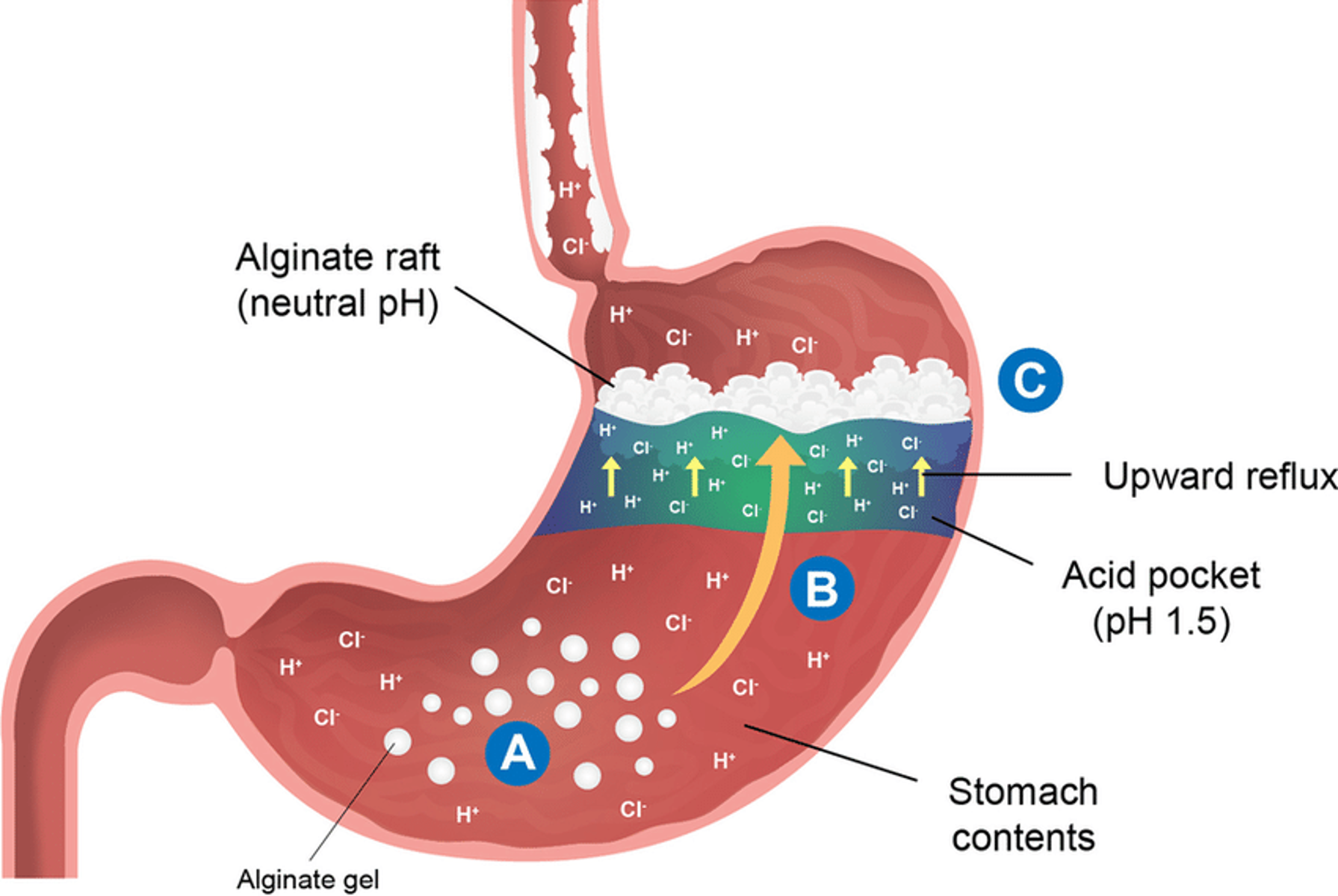
Instead, an alginate formulation forms a floating barrier - commonly called a "raft" - at the top of the stomach contents, right where reflux is most likely to originate.
Think of it as a bouncer. The stomach can go about its business. The acid can go about its business. The alginate simply helps keep everybody where they belong.
Ingenious!
SO, WHAT EXACTLY IS ALGINIC ACID?
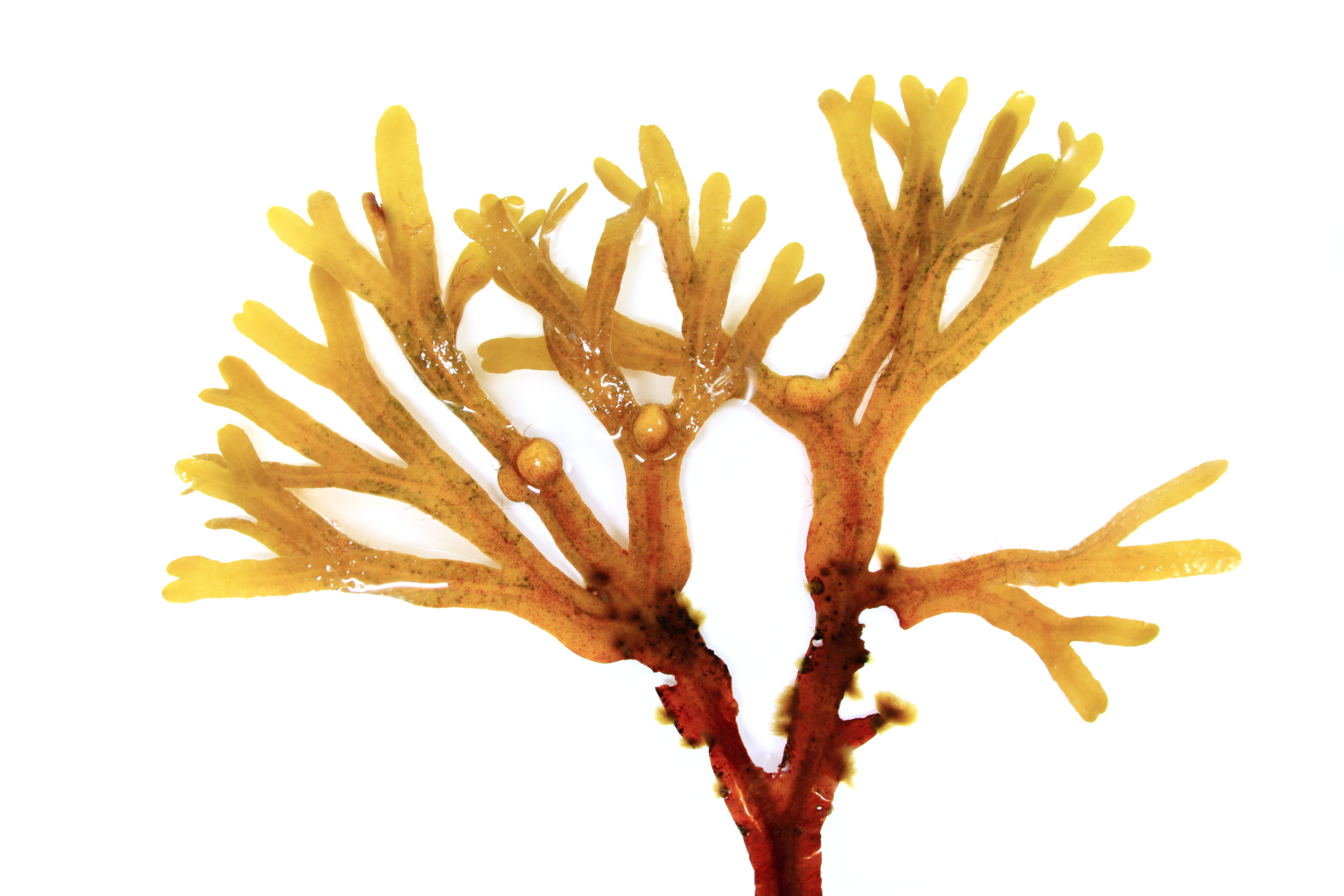
Alginic acid is a naturally occurring polysaccharide found primarily in the cell walls of brown seaweeds. Its salts are called alginates, with sodium alginate being one of the forms commonly used in reflux products.
Alginate has the remarkable ability to form a gel. In appropriately formulated reflux products, that gel combines with other ingredients and forms a low-density, foam-like raft that floats on top of the stomach contents. The process can happen rapidly after the product reaches the stomach.
That by itself is pretty interesting.
But to appreciate why it can be so helpful for reflux, we need to talk about something I had also never given much thought to before:
THE ACID POCKET
When we eat a meal, the food entering the stomach temporarily buffers some of the stomach acid.
But newly secreted acid can collect near the upper portion of the stomach after eating, creating an area of relatively high acidity close to the gastroesophageal junction - exactly where the esophagus meets the stomach. Researchers call this the postprandial acid pocket.
And look at the unfortunate geography!
You have a concentrated acidic region sitting near the very doorway through which stomach contents can escape upward into the esophagus. Studies using pH measurements, manometry and imaging have actually demonstrated this acid pocket and shown that an alginate-antacid raft can displace it away from the gastroesophageal junction. Now the raft concept really begins to make sense.
PUTTING A LID ON IT
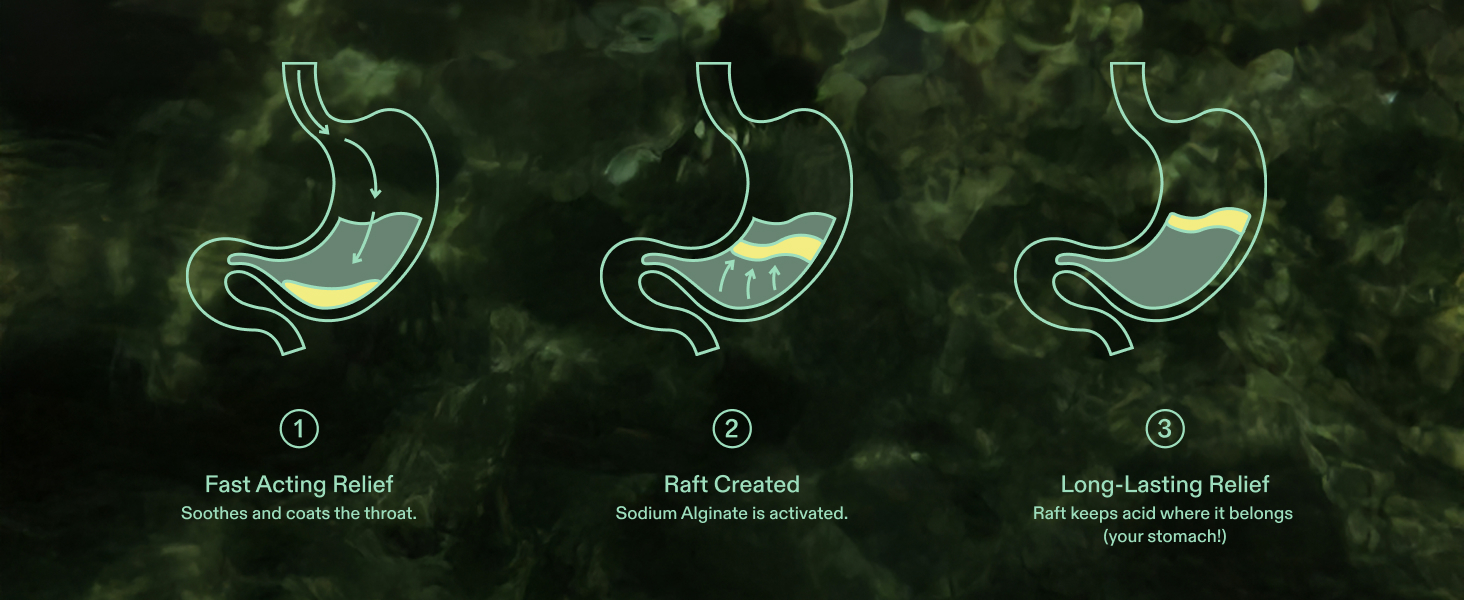
Once the alginate formulation encounters the stomach environment, it forms its gel raft and floats above the meal. In other words, it positions itself between the stomach contents and the esophagus.
If reflux occurs, the raft can provide a physical barrier and may itself be preferentially displaced upward rather than allowing the more damaging gastric contents underneath it to reach the esophagus.
Hence my webinar subtitle:
PUTTING A LID ON REFLUX!
It isn't literally a lid, of course, but it is a wonderfully simple way of picturing what is happening. And this is what impressed me so much when I first learned about it. Rather than asking, "How do we stop the stomach from producing acid?" we're asking a completely different question:
"How do we keep the stomach contents where they belong?"
REFLUX ISN'T ALWAYS ABOUT TOO MUCH ACID
 This distinction is important. We routinely call it "acid reflux," but reflux is fundamentally a problem of stomach contents moving upward into an area where they don't belong.
Those contents may certainly be acidic. But the refluxate can also contain food, digestive enzymes such as pepsin, bile and other gastric or duodenal contents. And reflux can occur even when what comes up isn't highly acidic. This helps explain why reducing stomach acid doesn't necessarily eliminate the reflux event itself.
A proton pump inhibitor can substantially reduce acid production. What it cannot necessarily do is stop material from traveling upward. Alginate approaches the problem from the other direction: create a mechanical barrier to the refluxate. BRILLIANT! Consensus recommendations describe alginate rafts as capable of reducing reflux of both acidic and nonacidic stomach contents, and that is a very different strategy.
AND THEN THERE IS LPR
This becomes especially interesting when we consider laryngopharyngeal reflux, or LPR - sometimes called "silent reflux." And, lately, I've had a "raft" of people reporting symptoms that sound like this. I've used other things with them with some improvement, but now that I know about this, watch out LPR - your days are numbered!
With ordinary GERD, we tend to think of heartburn: burning behind the breastbone, acid coming up, perhaps a sour taste. LPR can look quite different. People may experience chronic throat clearing, hoarseness, cough, a lump or "something stuck" sensation in the throat, excess mucus, sore throat, voice changes or other upper-airway symptoms.
And some people with LPR have little or no traditional heartburn, because the problem isn't simply the acidity of the reflux.
Tiny amounts of gastric material reaching the delicate tissues of the throat and larynx can be irritating, and pepsin has attracted particular attention as a potentially important component of LPR. Yes, and when I learned that it took me a bit to wrap my head around it. That's before I learned about the "acid pocket" and the other components of "refluxate."
Those tissues weren't designed to deal with stomach contents. This is another reason the alginate concept makes so much sense to me. If you can reduce the reflux event itself, you potentially reduce exposure not only to acid but to the other things traveling with it. Think of it; no more "throw-up burps" in the middle of the night for those of you who experience that nasty occurance!
WHAT DOES THE RESEARCH SAY?
This isn't simply a clever theory. A systematic review and meta-analysis of randomized trials involving more than 2,000 participants found that alginate therapies were significantly more effective than placebo or antacids for relieving GERD symptoms.
And research into LPR continues to accumulate. A 2025 systematic review examined 16 studies involving alginates and laryngopharyngeal reflux and concluded that alginates demonstrated benefit both when used alone and when used alongside proton pump inhibitors. This is really huge, in my humble opinion.
WHEN DO YOU TAKE IT?
 Timing makes perfect sense once you understand how alginate works. We want the raft sitting on top of the stomach contents during the period when reflux is most likely to occur.
Consequently, alginate reflux products are commonly used after meals, and some are also used at bedtime.
This is very different from taking something intended to alter stomach-acid production or digestive function before eating. You're essentially eating your meal and then putting the "lid" on afterward. I love mechanisms that make intuitive sense!
NOT ALL ALGINATE PRODUCTS ARE THE SAME
Seeing "alginate" on a label doesn't automatically tell us how effectively that particular product will form a reflux-preventing raft. The properties of the raft depend upon the formulation, including the type and amount of alginate, the presence of bicarbonate, calcium or other ingredients, and the resulting strength and buoyancy of the gel. Many traditional alginate reflux products combine alginate with bicarbonate and sometimes antacid ingredients. When bicarbonate reacts in the acidic stomach environment, carbon dioxide becomes trapped within the alginate gel. Picture tiny gas bubbles becoming caught in the gel and making it buoyant. Now it floats.
There's your raft!
That means I wouldn't choose an alginate product simply because the word "alginate" appears somewhere on the ingredient list. For reflux purposes, we want a product specifically formulated to create that raft. This is the one I have honed in on to recommend to my "people." Life Extension Esophageal Guardian, Vegetarian Chewable Tablets, 60 Count - Wondrous Roots
BUT WHAT ABOUT THE STOMACH ACID?
 Stomach acid is there for a reason. We need an appropriately acidic stomach environment for normal digestion, nutrient handling and defense against ingested microorganisms. And some people - I would guess probably more than not - experiencing reflux may not have excessive stomach-acid production at all.
That is why I find the alginate approach so appealing. The fundamental mechanism doesn't require shutting down normal gastric acid secretion. It is possible for an alginate product to contain antacid ingredients that neutralize some acid locally, so individual formulations differ. But the distinctive feature of alginate therapy is the physical raft, not systemic suppression of acid production.
Again:
- Doesn't necessarily change what the stomach is doing.
- Helps keep what is in the stomach from going where it shouldn't.
HOW DOES THIS FIT WITH OTHER REFLUX STRATEGIES?
Learning about alginate certainly doesn't make me throw out everything else I've used over the years. Different approaches address different contributors to reflux.
- DGL may help soothe and support mucosal tissues.
- Mastic gum has entirely different applications within gastrointestinal health.
- Betaine HCl may be appropriate in carefully selected situations where inadequate gastric acidity is part of the picture.
- And I still love my Siberian pine nut oil!
Diet, meal size and timing, body position after meals, weight when relevant, hiatal hernia, esophageal motility, lower esophageal sphincter function and individual food triggers can all be pieces of the reflux puzzle.
Alginate adds another tool - and a remarkably unique one - to the toolbox. Who knew???? And because its mechanism is so different from these other strategies, it may fit alongside them rather than necessarily replacing them. In the video my client took notes from, Dr. William Li recommended alginic acid and DGL about 20 minutes after eating.
SO:
 That's pretty much how I felt after learning about this. I have spent years thinking about how to calm reflux, how to support the esophagus, how to improve digestion, how to address stomach acid appropriately, and how to identify what might be causing someone's symptoms.
And sitting there all along was a brown-seaweed-derived substance capable of forming a floating raft over the stomach contents. Seriously? Sometimes the most impressive solutions aren't the most complicated.
Alginic acid doesn't need to change an elaborate biochemical pathway. It doesn't need to convince the stomach to stop doing what the stomach was designed to do.
It simply takes advantage of some very clever chemistry and physics.
- Form the raft.
- Cover the acid pocket.
- Help keep stomach contents where they belong.
Or, as I said before:
Let alginate be the bouncer.

ADDITIONAL RESOURCES
I talked about alginic acid and alginate therapy in my September 19, 2026 Zoom Webinar as one of "A Trio of Wonders." There you'll find the video presentation as well as the PDF version of the PowerPoint slides to view, download and share.

The other two "wonders" are Creatine and Astaxanthin.
Three entirely different discoveries - and, in my case, three excellent reminders that there is always something new to learn.
Advice & articles
-

ALGINIC ACID: Putting a Lid on Reflux!
20th Sep 2026I found it a bit of a sobering shock when a client told me just last week that she had discovered th
-
ASTAXANTHIN: The Powerhouse Pink Antioxidant!
20th Sep 2026As anyone who has known me for even a relatively short period of time knows, I am a glutathione enth
-

CREATINE: Not Just For Bodybuilders!
20th Sep 2026For the longest time, I thought of creatine, if not exclusively, at least primarily as a bodybuilder
- Read more articles